What Is A Truck Refrigeration System?
A truck refrigeration
system also known as a reefer. It is an internal container used for intermodal
freight transport that is refrigerated for the transportation of temperature
sensitive cargo. The general options are available to support freight in a cool
or fresh temperature range or in a frozen temperature range. A cold range is
usually used for loads such as fresh food or other perishable items. A truck
refrigeration system could be temperature adjustable to haul heated goods
as well, but it's less common. You can find the truck refrigeration system using
a couple of different cooling methods. You may see both diesel powered
generators and cryogenic cooling systems.

How does the Truck Refrigeration system works
The truck refrigeration
system operates on a closed system. Removing heat and maintaining a steady
temperature is what a refrigeration system is all about. They operate by
collecting and pumping heat throughout the systems. Here are the core
components that are making this work.
- The compressor
There is a small engine within the refrigeration system that
drives the compressor. The compressor draws in gaseous refrigerant and
compresses it. The pressure from this liquefies the gas. This then gives off
heat to the body of the compressor and air itself. From here, the temperature
is still fairly warm, and the refrigerant goes through to the condenser.
- The condenser
The condenser receives the liquid from the compressor. Then a heat
exchange process begins. The warmth of the liquid flows to the walls of the
tubbing, then outside to the attached fins. The fins provide more surface area
with which to cool outside air that comes in through the condenser fan. The
process is very similar to how a radiator cools an engine.
- The evaporator
The evaporator is located in the trailer. The refrigerant that has
now given up most of its heat to the condenser has turned into a cool liquid.
The refrigerant is then released into the evaporator through a metering valve
that works like a throttle to control the amount of cooling.
In the evaporator the refrigerant expands and becomes a gas. As it
goes through this process it absorbs lots of heat from the surrounding finned
coils, which transfers heat from air flowing over the fins to the refrigerant.
The trailer is being cooled by giving up some of its heat to the evaporator.
This entire process continues to repeat until the desired temperature is
reached.
Parts of a Truck
Refrigeration
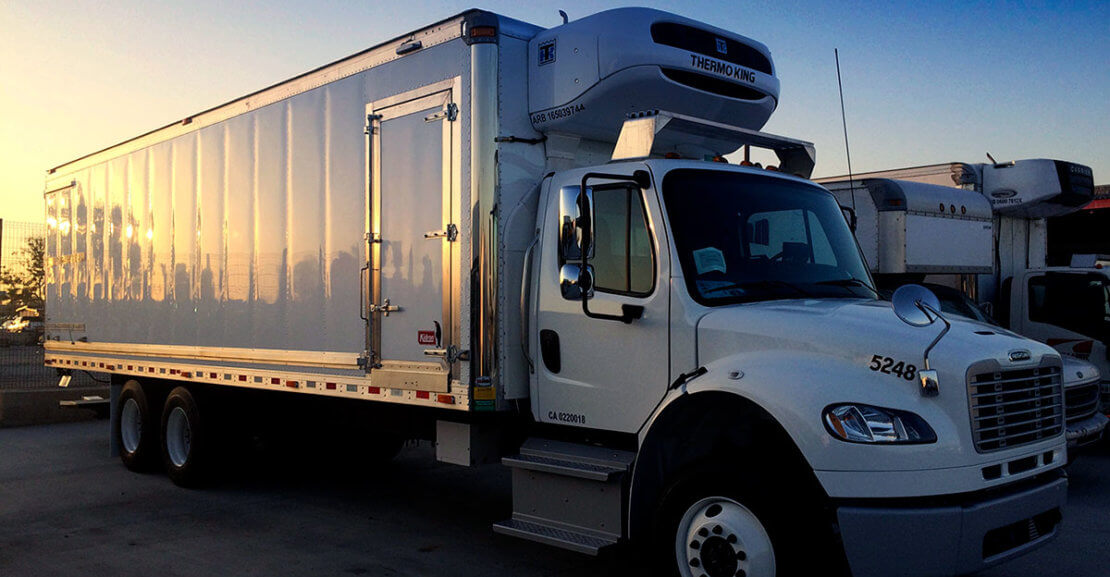
The truck refrigeration
naturally has more parts than a standard shipping trailer. Here are some
various pieces:
- Truck
refrigeration system
- Insulated
box
- Air
chute
- Air
ride suspension
- Tire
inflation system
Most truck refrigeration
systems are 53 feet long, though they are available in other sizes as well. If
you want more detail you can contact refrigerated trucks services for more information.
Final mechanical tidbits
Everything that is stated
above is what makes the truck refrigeration system work properly and requires
fuel. This means a higher cost of operation for a driver or company. Adding on
to the typical fuel you need for the truck, you will also need to keep the
truck refrigeration system fueled. Which means higher fuel costs.
Most truck refrigeration
tanks hold up to around 50 gallons of fuel. This should last anywhere
from four to five days, but it can vary. Proper maintenance, ambient
temperature and overall condition of the trailer and unit can affect the truck
refrigeration fuel consumption. Since the truck refrigeration fuels operate on
a closed system cycle, how you drive does not affect its fuel
consumption.
Last but not least, the
temperature range on the truck
refrigeration system unit is remarkable. You can find units stretching from
a negative 29 degree celsius to as high as 40 degrees celsius.
4 Cold Hard Facts About Using a Refrigerated
Truck for Business
1. How much space do you need?
Not all refrigerators and
freezers are the same. Although some can hold 3 full-size moose, some can only
hold one paddle and one six-pack abs. This is essentially the same for
refrigerated trucks. Regardless of your needs and constraints, there is a
climate-controlled vehicle that can meet your delivery needs.

For growing companies and
wholesale companies, it is necessary to have enough space to store frozen
products. However, in some places, such as narrow city streets or low-ceiling
parking lots, too much space may reduce efficiency and labor intensity. When
choosing the right equipment for you, the operating environment and storage
requirements are important factors to consider.
2. Consider industry
demands
Not all delivery situations
have such restrictions and require smaller vehicle sizes. For wholesale work,
the possibilities are really great. If you are transporting large quantities
of goods, there are several types of box trucks that can be used in the
field of frozen agricultural products.
From cabling box trucks to
flatbed trucks, there is always a body style that can meet your storage needs
and size constraints. Depending on the degree of specialization of your
application, you can always choose to customize a specific unit according
to your delivery needs. Contact us now to request your personalized quote
3. Consider how your
refrigerated trucks works
Take a refrigerator and put
it in the back of your truck. Easy! Not even close. Refrigerated trucks do, in
fact, they have a built-
in refrigerator or freezer. However, these units operate seamlessly with
the vehicle’s electrical and charging system.

An engine mounted
compressor paired with a skirt mounted condenser makes things cold,
while fans direct air to each and every part of the uint. These systems use the
vehicle’s factory components to generate the electricity needed for the
refrigerated delivery.
4. Making your budget
work for you
When looking for refrigerated trucks or vans, one problem you may
encounter is price. However, there are some affordable options:
Consider a truck tailored to your specific size and space needs.
There are a large fleet of vehicles that fit their price range very well. You
can also consider equipping the commercial
vehicle with a certain degree of cooling. If you have a truck or van that
you want to use for your business, check how much it costs to add a
refrigerator system to it. It may turn out to be a cheaper and more efficient
option than buying a rig overly excessive for your needs.
With this insigh, do check out Singapore truck
refrigeration servicing and get the suitable one you want and need!

Comments
Post a Comment